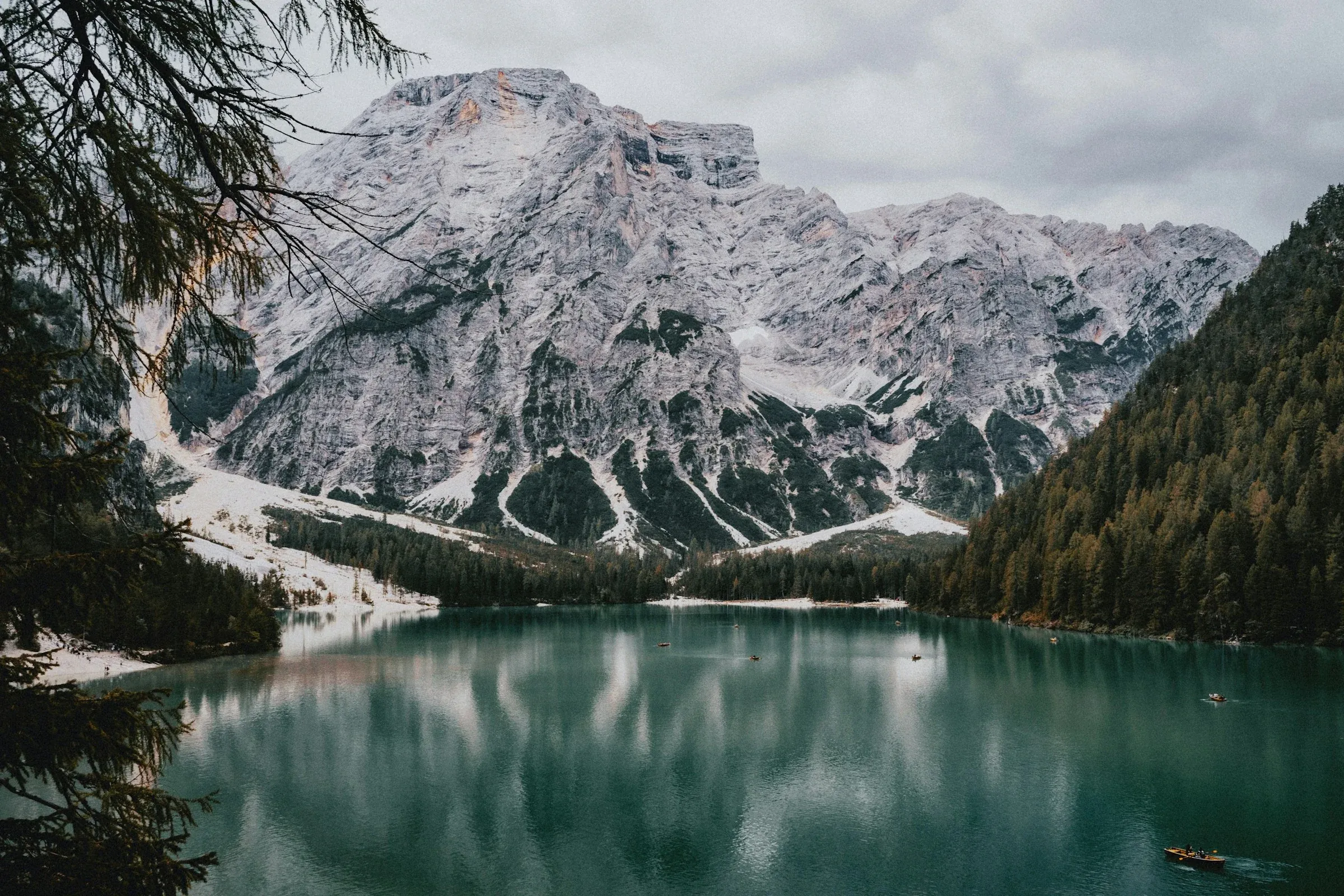
The Dolomites do something no other mountain range quite manages. For about twenty minutes after the sun has gone, the rock keeps the light and turns pink — the locals call it enrosadira, and it is the reason half the people here are standing outside at nine in the evening with their dinner going cold.
What the days look like
The valleys are wide and green and surprisingly gentle. You can walk for hours on the meadows below Braies or Sesto without ever really climbing, with the walls standing over you the whole time. It is the rare mountain landscape you can enjoy at a stroll.
The lakes are the other draw, and they are busy. Braies has a car park problem by nine in the morning and a queue for the boathouse by ten. Sleep close, get up at five, and you will have an hour with the mist on the water and nobody in it — the story in the journal about that morning explains the arithmetic.
When to go
Late June to mid-September. Outside that window the high passes close and the rifugi shut, and the valleys go quiet in a way that is lovely but limited.
Book beds, not days. The rifugi fill months ahead in August. Everything else can be decided on the morning, with the forecast.
What to bring
- Something genuinely warm. At 1 500 metres a June dawn by the water is uncomfortable for the first ten minutes
- A head for the language border: this is South Tyrol, and half the signs are in German first
- Patience with the car parks, or the discipline to be early