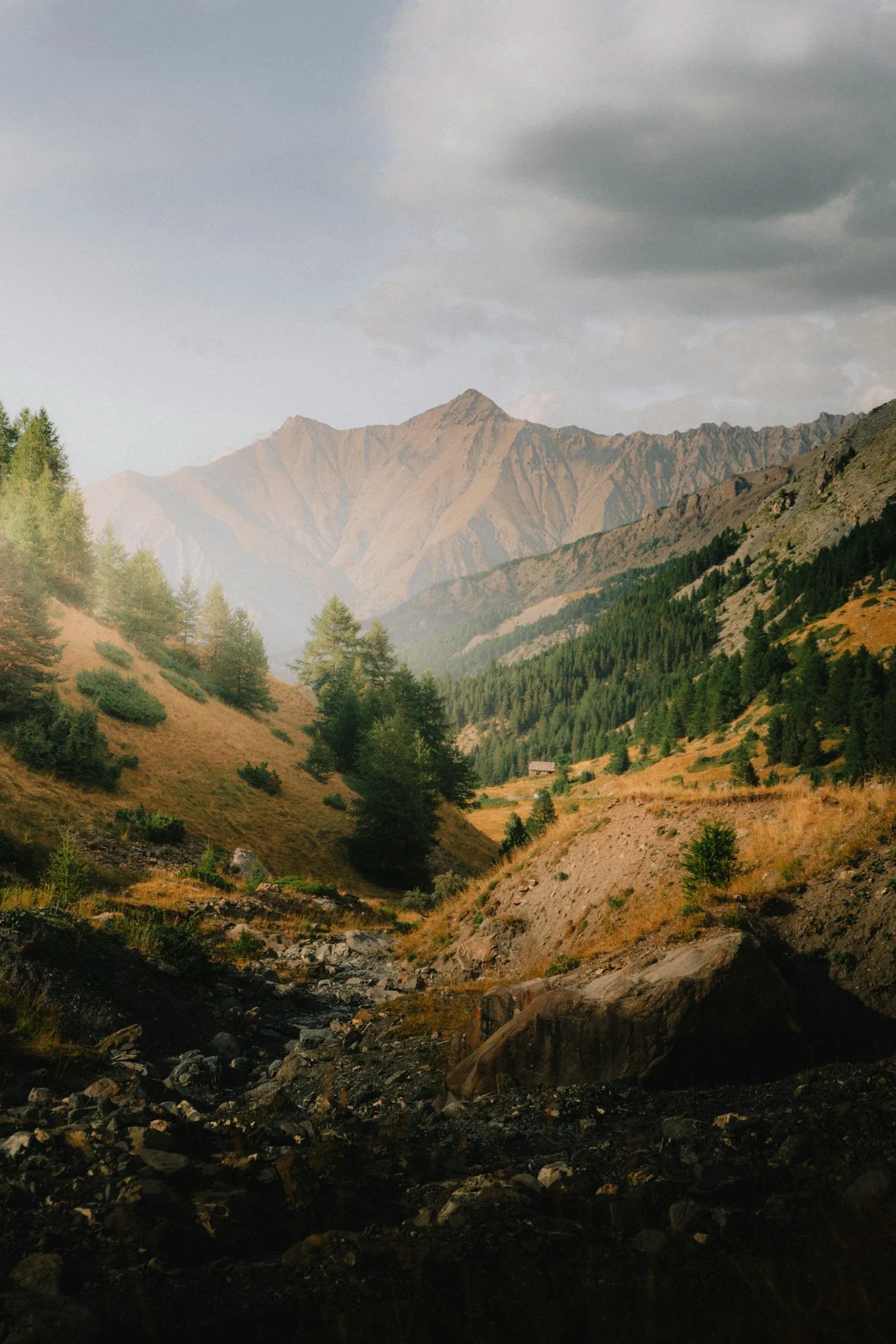
The last light clings to the ridges for longer than it should. For a few minutes the whole valley hovers between two states — not day, not yet night — and everything that was solid at noon goes soft and uncertain. This is the part almost nobody stays for.
I have watched it happen from the same slab of rock maybe forty times. The pattern is always the same. Around an hour before sunset the trail starts to empty. By the time the sun actually drops behind the western wall, I am usually alone. And then, ten or fifteen minutes later, the mountain does the thing I came for.
The light nobody waits for
Photographers call it blue hour, which makes it sound like a scheduled event. It is closer to a slow collapse. The direct light goes first, then the warm bounce off the snowfields, and what is left is a flat, even, faintly blue illumination that comes from the whole sky at once rather than from any particular direction.
Rock that looked grey and unremarkable all afternoon turns violet. Snow reads as pale lilac. Water goes almost black. The contrast drops away and suddenly you can see into the shadows — the gullies, the seams in the limestone, the small terraces you had not noticed were there.
A landscape does not have one appearance. It has a schedule.
The other change is acoustic. Wind usually drops at dusk in an alpine valley as the slopes stop shedding warm air. What is left is very specific: meltwater somewhere below, the occasional stone shifting, and a kind of low pressure in the ears that I have never been able to describe properly to anyone who has not stood in it.
Staying is a logistics problem
The reason people leave is not that they do not want to see this. It is that staying makes the day harder.
- You will walk down in the dark. Bring a headtorch you have actually tested, and know the descent well enough that you are not route-finding by torchlight.
- You will get cold fast. The temperature drop after the sun goes is steeper than the forecast suggests, especially near water. A warm layer you have not worn all day is not optional.
- You will be slower than you planned. Add a full hour to whatever you think the descent takes.
None of that is complicated. It is just unglamorous, and it turns a pleasant afternoon walk into something that requires a small amount of commitment. Which is exactly why the ridge is empty.
What you actually take home
I have a hard drive full of photographs from these evenings and honestly most of them are unremarkable. The light is beautiful, but beautiful light photographs easily and there is a lot of it about.
What stays with me is different, and harder to explain. It is the memory of being somewhere at the moment it stopped performing. All day the mountain is a view — something arranged for the people looking at it. After sunset that drops away and the place goes back to being a place, indifferent, getting on with its evening.
Standing in that for twenty minutes is the closest thing to a reset I have found. Then you turn the torch on, and you walk down.